
Miami Sailing School has released a detailed navigation guide covering charts, GPS use, and dead reckoning to help sailors build essential seamanship skills.
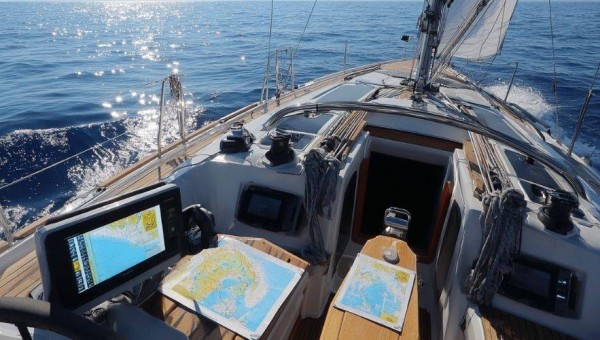
New Resource Highlights Charts, GPS, and Dead Reckoning for Safer Seamanship
Miami Sailing School has released a new in-depth educational guide focused on the fundamentals of navigation, offering sailors a structured introduction to chart reading, GPS operation, and dead reckoning. The new resource, titled Basics of Navigation: Charts, GPS & Dead Reckoning, emphasizes the importance of developing reliable navigation habits both with and without electronic equipment. The publication reflects Miami Sailing School’s continued commitment to strengthening seamanship skills for sailors preparing for certification, exploring Biscayne Bay, or planning extended voyages along South Florida’s coastline.
A Complete Breakdown of the Skills Every Sailor Must Understand
The guide explains the central role that navigation plays in safety and decision-making on the water. It outlines how sailors can interpret nautical charts, identify hazards, plot bearings, and verify their position using both analog and digital tools. Miami Sailing School highlights that navigation is more than simply drawing lines or following a GPS track; it is a discipline that requires awareness, interpretation, and practical knowledge of environmental conditions. By connecting traditional chartwork with modern GPS for sailboats, the school ensures that sailors understand how the tools complement each other and why strong foundational skills remain essential even in an era of advanced electronics.
Instruction Reinforced by NOAA, ASA, World Sailing, and US Sailing Standards
The newly published guide integrates navigation principles aligned with recognized educational and safety standards. It references the use of NOAA’s official chart resources and the navigation guidelines presented through leading instructional bodies such as the American Sailing Association, World Sailing, and US Sailing. Miami Sailing School uses these standards to reinforce its curriculum, helping students develop confidence in both coastal and offshore navigation. The guide explains how traditional techniques such as dead reckoning work alongside GPS technology to provide a more complete understanding of a vessel’s position when conditions change or visibility declines.
Focus on Chart Interpretation, Real-World Landmarks, and Hazard Avoidance
Miami Sailing School’s new resource provides detailed explanations of chart symbols, depth shading, channels, underwater obstructions, and aids to navigation. It highlights how real-world seamanship is strengthened by correlating what sailors see on charts with what they observe on the water. The guide describes how sailors can use buoys, beacons, daymarks, and shoreline features to verify their position and maintain accuracy, even when electronics provide additional support. This focus on observational navigation helps sailors understand how to adapt quickly in unfamiliar waters or unexpected conditions.
GPS for Sailboats Positioned as a Powerful Tool with Practical Limits
The guide dedicates a substantial section to the advantages and limitations of GPS for sailboats, explaining how route tracking, electronic charts, alarms, and waypoint navigation improve situational awareness. Miami Sailing School clarifies that while GPS enhances safety and simplifies route planning, it should never replace manual plotting or traditional techniques that form the backbone of seamanship. The publication emphasizes that sailors must remain prepared for equipment failure or environmental interference and rely on their own skills to maintain safe navigation.
Reaffirming the Importance of Dead Reckoning in Modern Seamanship
Miami Sailing School underscores dead reckoning as a timeless method that continues to play a critical role in sailing navigation basics. By teaching sailors to calculate their position using speed, heading, and time, the school helps them build awareness of current effects, drift, and course deviation—factors that GPS alone cannot fully interpret. The guide explains how dead reckoning supports a sailor’s ability to make informed decisions even without electronic assistance, reinforcing the value of understanding one’s movement through the water under all conditions.
Blending Navigation Methods for Accurate and Reliable Positioning
The guide encourages sailors to combine chartwork, GPS interpretation, and dead reckoning to maintain the highest level of accuracy while underway. Miami Sailing School explains that this hybrid approach improves route planning, enhances confidence, and prepares sailors for sudden changes such as fog, low visibility, system failure, or unexpected weather shifts. By teaching students to verify their GPS position with charted references and then support that awareness through consistent dead reckoning calculations, the school reinforces a comprehensive and professional standard of navigation.
Miami Sailing School’s Continued Commitment to Professional Seamanship
Through the publication of this new guide, Miami Sailing School continues to expand its library of educational resources designed to support sailors at every skill level. The school highlights that the most impactful navigation training comes from applying these principles on the water, where students learn to interpret charts, plot courses, evaluate environmental factors, and operate GPS systems under real conditions. Miami Sailing School remains dedicated to helping sailors develop independence, safety awareness, and the confidence needed to navigate any voyage with clarity and skill.
Media Contact
Organization: Miami Sailing School
Contact Person: Russ Beyer
Website: https://miamisailing.com/
Email: Send Email
City: miami
State: florida
Country:United States
Release id:41908
The post Miami Sailing School Publishes Comprehensive Guide on Sailing Navigation appeared first on King Newswire. This content is provided by a third-party source.. King Newswire makes no warranties or representations in connection with it. King Newswire is a press release distribution agency and does not endorse or verify the claims made in this release. If you have any complaints or copyright concerns related to this article, please contact the company listed in the ‘Media Contact’ section
Disclaimer: The views, suggestions, and opinions expressed here are the sole responsibility of the experts. No Clear Bulletin journalist was involved in the writing and production of this article.